


Pursue MBBS in Russia and Shape Your Future in Medicine with Rus Edutech
If you are planning to pursue MBBS in Russia and confused about choosing the right university or getting genuine guidance, you are at the right place — Rus Edutech. Since 2010, Rus Edutech has been guiding Indian students for admission to Russian medical universities. With a team of doctors and 16 years of experience, we provide trusted counselling and complete support for your MBBS journey in Russia.



MBBS in Russia- Overview
Indian students have been going to study MBBS in Russia for the last 30 years. The main reason for its popularity is studying MBBS from excellent universities at affordable fees, along with hostel and food expenses also being quite affordable. More than 90% of MBBS colleges in Russia are government, due to which students get quality medical education and the degree is also recognized worldwide. Indian students also easily pass the FMGE examination after returning to India.
The duration of MBBS from Russia is 6 years, which includes 1 year of internship. MBBS Program in Russia are conducted in both Russian and English medium. At the time of taking admission, students need to pay special attention to whether the university in which they are taking admission provides the full 6 years of course in English medium or not. Because some universities in Russia are bilingual, that is, in them the first 3 years of course are conducted in English medium, but the next 3 years clinical subjects are taught in the Russian language.
Rus Edutech has been getting Indian students admitted to medical colleges in Russia for the last 15 years. During this time, our team has visited about 80% of the universities in Russia. Whatever information related to doing MBBS in Russia will be given in this blog will be 100% authentic and reliable. This blog has been written by Dr. Aryan, who himself has completed MBBS from Russia and has personally visited more than 50 medical universities. In this blog, we will discuss many important topics, which will help Indian students a lot at the time of taking admission, such as:
Quick facts related to MBBS in Russia:
Tips to Choose top medical colleges in Russia (for Indian students)
While selecting Russian universities, students often get influenced by agents and either choose bilingual colleges, or take admission in such colleges whose FMGE passing percentage is quite low and where adequately equipped labs are not available for clinical rotation, in which students can do practical practice. Let us know what things should be given special attention while selecting a medical college:
Select a full English medium college:
About 50–60% of medical universities in Russia are bilingual, in which the study of the first 3 years is conducted in English medium, while in the next 3 years clinical subjects are taught in the Russian language. Many times agents hide these facts and students are given admission in bilingual colleges. As a result of this, students have to study clinical subjects in the Russian language after the third year, which also affects the FMGE results. For this reason, many students are not able to pass the FMGE examination after returning to India. Rus Edutech provides bond paper services to students. That is, all information related to college fees, hostel fees, medium of teaching, availability of clinical departments, and FMGE coaching facility is given in written form on bond paper, so that students do not have to face any kind of problem in the future.
FMGE Passing Percentage:
NBE releases the FMGE passing percentage every year. Students can look at the data of the last 5–7 years and estimate from which college in Russia the maximum number of students are able to pass the FMGE examination after doing MBBS.
Clinical Department and Patient flow in Hospital
Indian students who have gone abroad to do MBBS after 2024 or will go in the future will now have to pass the NEXT examination instead of FMGE in order to practice in India after completing MBBS. The NEXT examination is slightly different from FMGE. It has been stated by NBE that more focus will be given to clinical subjects in the NEXT examination. That is, only those students will be able to pass this examination who have a good command over clinical subjects. Let me tell you that in NEXT-1, students will be examined in clinical subjects, that is, Medicine, Surgery, OBG, Pediatrics, ENT and Ophthalmology. Whereas in NEXT-2, students will have to give a practical examination, that is, VIVA, after completing the internship. Therefore, now it is not sufficient for students to take admission in any college. Students will have to choose a college that meets the standards of Indian medical colleges and where well-equipped labs are available for clinical training. Along with this, the number of patients (patient flow) in the hospital should be high, so that students can interact with as many patients as possible and their clinical skills can become better.
Impact of FMGL Regulation on MBBS in Russia
After the FMGL regulation came into force, Indian students studying MBBS from Russia may now have to do 6 years + 1 year of internship. However, till now Russian universities are claiming that the MBBS course which was earlier of 6 years, within the same duration 1 year of separate internship will be conducted. But till now no final and clear official instruction has been issued on this subject.
The students who have already taken admission in MBBS in Russia in 2021, that is, those who will receive their degree in 2027, and they will appear in the FMGE (FMGE) or NEXT (NEXT) examination in the same year. At the same time, the final clarification will be given by the National Board of Examinations (NBE) as to whether such students will be allowed to appear in the examination or they will have to complete an additional 1 year of internship (6+1 years).
To practice as a doctor in Russia, students have to pass the Russian State Final Certification examination, which is called GOSS/GOZZ. Along with this, it is necessary for the student to have fluency in the Russian language. Only after fulfilling both these conditions, students are eligible to practice as a doctor in Russia.
On this basis, it can be said that Russia fulfills the conditions of the FMGL regulation. Therefore, after completing MBBS course from Russia, Indian students become eligible to appear in the NEXT (NEXT) or FMGE (FMGE) examination in India by following the FMGL Regulations
Highest FMGE Passing Percentage University in Russia
The FMGE Passing Percentage table below is based on the **official NBEMS (National Board of Examinations in Medical Sciences)** institute-wise performance report. It presents FMGE passing percentages from **2019 to 2024**, along with the **year each medical university was established**. This data can help you compare the academic performance of different Russian universities and make a more informed decision while selecting the right medical college in Russia. Rather than choosing a university based only on tuition fees or popularity, reviewing its FMGE performance can provide valuable insight into its educational outcomes.
| MEDICAL UNIVERSITY | FOUNDED | 2019 | 2020 | 2021 | 2022 | 2023 | 2024 |
|---|---|---|---|---|---|---|---|
| Bashkir State Medical University | 1932 | 31.25% | 18.25% | 29.79% | 38.41% | 22.87% | 22.31% |
| Kazan State Medical University | 1814 | 33.13% | 23.61% | 45.25% | 45.45% | 23.29% | 30.73% |
| Orenburg State Medical University | 1944 | 39.34% | 24.32% | 41.76% | 39.30% | 30.80% | 43.40% |
| Crimea State Medical University | 1918 | – | – | 33.33% | 47.37% | 59.62% | 54.80% |
| Privolzhsky Research Medical University | 1920 | 39.53% | 28.95% | 42.24% | 40.31% | 28.23% | 44.60% |
| Smolensk State Medical University | 1920 | 39.15% | 24.00% | 38.15% | 34.92% | 25.27% | 42.91% |
| Penza State University | 1943 | 33.33% | 24.50% | 22.60% | 30.93% | 20.17% | 36.46% |
| Perm State Medical University | 1916 | 100% | 0% | 35% | 31.25% | 25.84% | 31.25% |
| Ulyanovsk State Medical University | 1988 | – | – | 13.64% | 27.63% | 25.40% | 31.69% |
| Peoples’ Friendship University (RUDN) | 1960 | – | – | 36.36% | – | 27.27% | 45.45% |
| Far Eastern Federal University | 1899 | – | – | – | 66.67% | 37.14% | 33.33% |
| Kursk State Medical University | 1935 | 34.42% | 18.41% | 23.37% | 24.70% | 16.49% | 22.29% |
| Tver State Medical University | 1936 | 24.37% | 12.06% | 19.23% | 18.61% | 13.97% | 24.38% |
| Altai State Medical University | 1954 | – | – | – | 34.26% | 22.12% | 22.31% |
| First Moscow State Medical University | 1758 | 13.79% | 6.67% | 4.55% | 30.19% | 20.97% | 22.22% |
| Volgograd State Medical University | 1935 | 28.01% | 14.74% | 17.22% | 21.31% | 13.18% | 19.28% |
| Belgorod State University | 1876 | 100% | 17.62% | 31.01% | 18.52% | 7.92% | 14.89% |

MBBS in Russia Fees Structure
Compared to private medical colleges in India, the fee for MBBS in Russia is quite low. In India, the total cost of doing MBBS from a private medical college can be approximately 80 lakh to 1 crore rupees, whereas the total cost of MBBS studies in Russia is between approximately 30 to 50 lakh rupees.
Most Russian medical universities take their tuition fees in rubles, while some universities also take fees in dollars. Apart from the tuition fees, students also have to pay hostel fees, library charges, medical insurance, medical checkup, visa extension and police verification fees in the college.
Further, we will know through a table how much the tuition fee and hostel fee of which college is. If any student wants detailed information of the complete fees, then they can contact our help desk and obtain complete information.







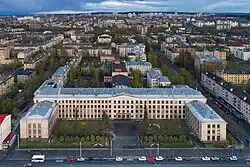


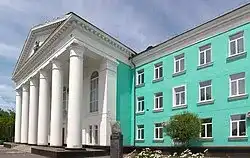


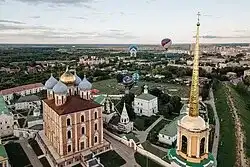

Is Russia a good option for MBBS for Indian students?
Often students ask whether doing MBBS from Russia will be right or not. The answer to this is—yes. If you select the right college by keeping in mind the points mentioned in this blog, then Russia can prove to be an excellent option for MBBS. Let us know the reasons why Russia is considered a good option for Indian students:
- The FMGE passing percentage of some medical colleges in Russia is up to 56–60%, which is considered quite good.
- Compared to Indian private medical colleges, the fees of medical colleges in Russia are quite low.
- The world ranking of Russian medical universities is good, due to which students get the opportunity to study in top 500 ranked universities of the world.
- About 95% of medical universities in Russia are government and many universities are very old and prestigious.
- If students choose a full English medium college, then the entire MBBS course is conducted in English medium. However, the colleges which are bilingual, in them the first 3 years of study are in English and the clinical subjects of the next 3 years are taught in Russian medium.
- Indian students have been going to Russia for MBBS studies for the last 30 years, therefore Russian universities have long experience of teaching Indian students according to the FMGE pattern.
- The relations between India and Russia have been good for many decades, therefore Indian students do not have to face any kind of problem from local people while living in Russia.
- In most medical colleges of Russia, the facility of Indian mess is available, due to which students are able to get Indian food there as well.
Join Our FREE Live Counselling Sessions
Get personalized 1-on-1 expert guidance for your medical admission journey — available every single day



Is it safe to study MBBS in Russia in 2026?
This question is often asked by students and parents whether it will be safe to go to Russia for MBBS after the war that started between Russia and Ukraine in 2022 or not. The answer is—yes, going to Russia is safe. Even during the Russia–Ukraine war, Indian students were studying in Russia and they did not face any kind of difficulties. After 2022, more than 3000 Indian students are going to Russia every year to study MBBS. Even during the war, the Rus Education team continuously kept visiting Russian universities and we ourselves saw that the students studying there did not face any kind of problem, because the war was happening on the Ukraine border, not inside Russia.
For the past many decades, the relations between India and Russia have been quite good, due to which Indian students do not face any kind of trouble from the local people there. In all medical college hostels of Russia, there are adequate arrangements regarding security, which ensures the safety of students. About 70% of Russia’s population belongs to the Christian religion. On the basis of all these facts, it can be said that Russia is a safe option for Indian students to study MBBS.

Is it safe to study MBBS in Russia in 2026?
After doing MBBS in Russia, students have many options. Either students can return to India and work as a doctor in India after passing the FMGE exam, or students can continue the residency program in Russia itself. Many such options are available, let us understand them one by one:
- Returning to India: Most students return to India after doing MBBS from Russia and appear for the FMGE exam. After passing the FMGE exam, students have to do 1 year of internship. After this, most students either prepare for NEET PG in India or start doing a job.
- Settling abroad: Some students have a dream to clear exams like USMLE, PLAB, AMC and do medical PG from countries like USA, UK, Australia, and settle abroad.
- Doing medical PG from Russia: After doing MBBS from Russia, some students start doing residency course further from Russia itself, that is, they do PG in any subject like surgery, medicine, OBG etc. After clearing the licensing exam of Russia, they settle in Russia itself.
Connect with Our MBBS Admission Experts
Get free one-on-one guidance from experienced MBBS admission experts.


A Smarter Way to Pursue MBBS in Russia
Get a seamless and hassle-free admission experience with expert guidance at every step. From selecting the right Russian medical university to completing the entire admission process online, we make your journey simple, transparent, and efficient — so you can stay focused on achieving your dream of becoming a doctor.
Start Your Stress-Free MBBS Journey in Russia With Us
8 Simple Steps to Start Your MBBS Journey in Russia
Frequently Asked Questions About MBBS in Russia
Get answers to all your important questions about MBBS in Russia, including eligibility, admission process, fees, universities, visa, and career opportunities.
