


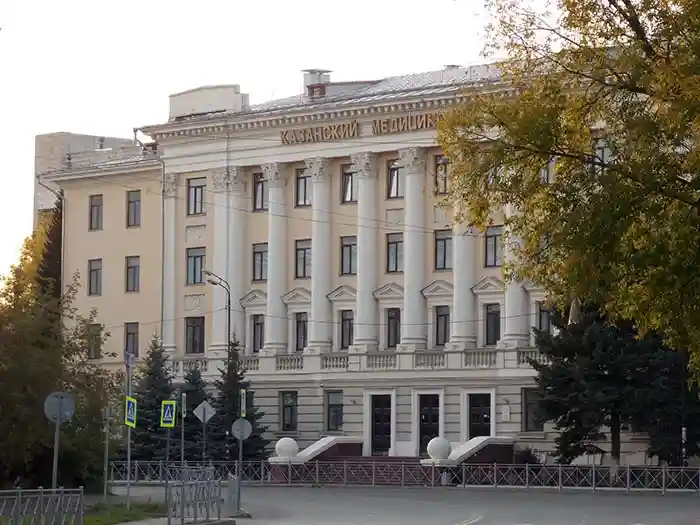


Kazan State Medical University (KSMU), Russia, is a well-established government medical university known for its long academic tradition and contribution to medical education. Located in the historic city of Kazan, the university traces its origins back to 1814, making it one of the oldest institutions for medical education in Russia. Over more than two centuries, KSMU has developed into a multidisciplinary medical institution offering education and professional training in various branches of healthcare.
For Indian students planning to pursue MBBS abroad, Kazan State Medical University is an option worth exploring because of its established medical education system, international student community, and opportunities for clinical learning. The university offers a six-year General Medicine programme in English for international students, including theoretical classes, laboratory work, practical sessions, and clinical training.
KSMU welcomes students from different countries and provides an opportunity to study in a multicultural academic environment. Along with medical subjects, international students also learn Russian, which is important for communicating with patients and participating in clinical activities during their education.
With its historical background, academic infrastructure, and focus on medical sciences, Kazan State Medical University Russia continues to attract aspiring doctors looking for medical education in an international setting.
About Kazan State Medical University
Kazan State Medical University (KSMU) is a federal government medical institution operating under the Ministry of Health of the Russian Federation. Situated in Kazan, the capital of the Republic of Tatarstan, the university has established a strong position in medical education, scientific research, and professional healthcare training. Its academic structure combines traditional medical teaching methods with modern approaches to healthcare education.
The university provides education across several medical and healthcare disciplines, including General Medicine, Dentistry, Pharmacy, Preventive Medicine, Nursing, and other related fields. Its academic system includes specialised departments, experienced teaching professionals, research facilities, and clinical training opportunities. Students receive theoretical knowledge alongside practical exposure to different areas of medicine, helping them understand the application of medical concepts in real healthcare settings.
Kazan State Medical University also has a dedicated faculty for international students. Its English-medium General Medicine programme allows students from countries such as India to pursue medical education without studying the entire curriculum in Russian. However, learning the Russian language remains an important part of the course, particularly for communicating with local patients during clinical training.
Is Kazan State Medical University Good?
Yes, Kazan State Medical University is considered a notable option for students planning to study medicine in Russia. Some of its key features include:
- Government University: KSMU is a state medical university operating under the Ministry of Health of the Russian Federation.
- Historic Institution: Established in 1814, it is among the oldest medical universities in Russia.
- English-Medium Education: International students can pursue the General Medicine programme in English.
- International Recognition: The university is listed in the World Directory of Medical Schools (WDOMS).
- Clinical Training: Students get opportunities to develop practical medical skills through clinical training.
- International Environment: The university welcomes students from different countries, creating a multicultural learning environment.
- Research Opportunities: KSMU provides academic and research facilities in various medical disciplines.
History of Kazan State Medical University
Kazan State Medical University has a history of more than 200 years in medical education. Its journey began in 1814 as a medical department of the Imperial Kazan University. Over the years, the institution expanded its academic facilities and introduced several specialised medical faculties.
Some important milestones in the history of KSMU include:
- 1814: Medical education began with the first meeting of the Council of the Medical Department at Imperial Kazan University on 14 May.
- 1837: The Anatomical Theatre was established to support medical teaching and practical education.
- 1840: The university opened its first clinical facility for medical training.
- 1930: The medical department became an independent institution named Kazan State Medical Institute.
- 1932: The Faculty of Paediatrics was established.
- 1956: The Faculty of Dentistry was introduced.
- 1975: The Faculty of Pharmacy began its academic activities.
- 1994: Kazan State Medical Institute received university status and became Kazan State Medical University.
- 2014: The university celebrated 200 years of medical education.
About Kazan
Kazan is the capital city of the Republic of Tatarstan and one of the major cultural, educational, and scientific centres of Russia. Situated at the meeting point of the Volga and Kazanka rivers, the city is known for its historical landmarks, modern infrastructure, and multicultural environment. Kazan is also popularly known as the Third Capital of Russia.
Some important features of Kazan include:
- Historical City: Kazan has a history of more than 1,000 years and celebrated its millennium in 2005.
- Geographical Location: The city is located approximately 715 km east of Moscow, in the European part of Russia.
- Student-Friendly Environment: Kazan is home to several universities and attracts students from different parts of the world.
- Cultural Diversity: People belonging to more than 115 nationalities live in the city, representing different cultures and religions.
- Famous Attractions: Popular landmarks include Kazan Kremlin, Kul Sharif Mosque, Bauman Street, and the Annunciation Cathedral.
- Transportation: The city has an international airport, railway connections, metro, buses, trams, and trolleybuses.
- Climate: Kazan experiences warm summers and cold winters, with temperatures often falling below freezing during winter.
- Modern Infrastructure: The city offers shopping centres, hospitals, restaurants, parks, sports facilities, and other essential amenities.
Kazan State Medical University MBBS Course Duration
The MBBS (General Medicine) programme at Kazan State Medical University is completed over 6 years, consisting of 5 years of academic medical education and 1 year of compulsory clinical internship. The programme combines theoretical learning, laboratory sessions, practical classes, and hospital-based clinical training.
The course structure is as follows:
- Total Duration: 6 years (5 years of academic study + 1 year of internship).
- First and Second Year: Students study basic medical subjects such as Anatomy, Physiology, Biochemistry, Histology, and Medical Biology.
- Third Year: Students begin studying clinical subjects, including Pathology, Pharmacology, and other medical disciplines.
- Fourth and Fifth Year: Focus on major clinical subjects such as General Medicine, Surgery, Paediatrics, Obstetrics and Gynaecology.
- Sixth Year: Dedicated to compulsory clinical internship and practical hospital training.
- Degree Awarded: General Medicine qualification after successfully completing the prescribed academic programme and internship.
Kazan State Medical University Medium of Instruction
Kazan State Medical University offers medical education in both English and Russian for international students. Indian students can choose the English-medium General Medicine programme, where academic teaching and examinations are conducted in English. However, learning Russian is also an important part of medical education, especially during clinical training and patient interaction.
Key points about the medium of instruction at KSMU:
- English Medium: International students can pursue the six-year General Medicine programme in English.
- Russian Medium: Students also have the option to study the medical programme in Russian.
- Lectures and Classes: The English-medium programme provides academic lectures and theoretical teaching in English.
- Practical Training: Laboratory sessions, practical classes, and academic activities are included in the English-medium curriculum.
- Russian Language Classes: English-medium students study Russian as a separate subject to develop communication skills.
- Clinical Communication: Knowledge of Russian helps students interact with local patients, doctors, and healthcare professionals during hospital training.
- Examinations: Students enrolled in the English-medium programme are assessed in English as prescribed by the university curriculum.
Kazan State Medical University MBBS Admission Eligibility for Indian Students
Indian students who wish to pursue MBBS (General Medicine) at Kazan State Medical University must fulfil the university’s admission requirements as well as the applicable National Medical Commission (NMC) guidelines.
The basic eligibility criteria for Indian students are as follows:
- Educational Qualification: Students must complete Class 12 or equivalent education from a recognised board with Physics, Chemistry, Biology/Biotechnology and English.
- Minimum Marks: General category students must secure at least 50% aggregate marks in PCB, while SC/ST/OBC category students require a minimum of 40%, subject to applicable eligibility rules.
- NEET Qualification: Qualifying NEET-UG is mandatory for Indian students planning to study medicine abroad and seek medical registration in India.
- Age Requirement: Students must complete 17 years of age on or before 31st December of the admission year.
- Valid Passport: Applicants must have a valid Indian passport for admission and visa formalities.
- Medical Fitness: Students may be required to submit medical fitness documents as part of the admission process.
- English Language: Students applying for the English-medium programme should have sufficient English proficiency to understand lectures and participate in academic activities.
Kazan State Medical University FMGE Passing Percentage
The FMGE passing percentage is an important factor for Indian students when selecting a medical university abroad. It indicates how many graduates from a particular university successfully clear the Foreign Medical Graduate Examination (FMGE).
According to the National Board of Examinations in Medical Sciences (NBEMS), the performance of Kazan State Medical University graduates in recent years is given below.
| Year | Students Appeared | Students Passed | Passing Percentage |
|---|---|---|---|
| 2025 | 387 | 107 | 27.65% |
| 2024 | 436 | 134 | 30.73% |
| 2023 | 395 | 92 | 23.29% |
| 2022 | 368 | 151 | 41.03% |
| 2020 | 233 | 55 | 23.61% |
Note: FMGE results represent the performance of previous graduates and do not guarantee the results of future students. Individual preparation, clinical understanding, and consistent study play an important role in clearing the examination.
Clinical Training at Kazan State Medical University
Kazan State Medical University provides clinical training through its affiliated hospitals, clinics, and healthcare institutions across the Republic of Tatarstan. Students get opportunities to observe medical procedures, understand patient management, and develop practical skills in different medical specialities.
The university uses several healthcare facilities for clinical education, including:
- 54 Clinical Training Units: Students receive clinical exposure through healthcare units associated with the Ministry of Health of the Republic of Tatarstan.
- 33 General Hospitals: These hospitals provide opportunities to understand different medical conditions and treatment approaches.
- 21 Polyclinics: Students can gain exposure to outpatient services, patient consultations, and primary healthcare.
- Approximately 9,000 Hospital Beds: The affiliated healthcare network offers a wide range of clinical facilities for medical education.
- Republican Clinical Hospital: It serves as one of the major centres for clinical teaching and practical training.
- Hospital of Emergency Medical Care: Students can observe emergency healthcare services and the management of critical medical conditions.
- City Hospital No. 18: This is another healthcare institution used for clinical education.
- Interregional Clinical Diagnostic Centre: Students get exposure to diagnostic procedures and specialised medical services.
The clinical training network includes different medical departments, allowing students to gain experience in medicine, surgery, paediatrics, gynaecology, and other healthcare specialities.
Join Our FREE Live Counselling Sessions
Get personalized 1-on-1 expert guidance for your medical admission journey — available every single day



Kazan State Medical University Hostel Facility
Kazan State Medical University provides hostel accommodation for international students, including Indian students. The university has multiple student hostels located close to its academic buildings. These accommodations offer basic facilities required for students to live comfortably during their medical education in Russia.
Some important hostel facilities for Indian students include:
- Hostel Accommodation: Students can apply for university hostel accommodation, subject to room availability and allocation.
- Room Sharing: Rooms generally accommodate 2–3 students, depending on the hostel and room category.
- Separate Accommodation: Separate accommodation arrangements are available for male and female students.
- Furnished Rooms: Rooms are provided with essential furniture such as beds, study tables, chairs, and wardrobes.
- Heating Facilities: Hostels have heating arrangements to help students stay comfortable during the cold Russian winters.
- Shared Kitchen: Common kitchens are available where students can prepare their own meals.
- Bathroom Facilities: Washrooms and shower facilities are shared among hostel residents.
- Internet Access: Internet facilities are available for students’ academic and personal requirements.
- Security: University hostels operate under established residential rules and security arrangements.
- Indian Food: Indian students can explore Indian mess and food arrangements available through student accommodation services.
Students should apply for hostel accommodation early because room availability is limited. Those who prefer independent living can also explore private apartments in Kazan, subject to university accommodation and registration requirements.
Kazan State Medical University Admission Process
Indian students interested in pursuing MBBS at Kazan State Medical University can apply through the university’s international admission process with guidance from an authorised admission representative. The admission procedure generally involves the following steps:
- Initial Counselling: Contact Rus Edutech to discuss university details, eligibility, fee structure, hostel facilities, and other admission requirements.
- Document Submission: Submit scanned copies of your Class 10 marksheet, Class 12 marksheet, NEET scorecard, and valid passport.
- Eligibility Verification: The submitted documents are reviewed to check whether the student meets the university’s admission requirements and Indian eligibility guidelines.
- Application Submission: After document verification, the application is forwarded to Kazan State Medical University for admission consideration.
- Provisional Admission Letter: The university issues a provisional admission or confirmation letter to eligible applicants.
- Entrance Examination: Students may be required to appear for the university’s entrance examination, as per the admission rules for the relevant academic year.
- Admission Confirmation: After successfully completing the required admission formalities, the university confirms the student’s admission.
- Fee Payment: Students complete the prescribed tuition fee payment according to the university’s official payment schedule.
- Visa Processing: After receiving the necessary university invitation documents, students apply for a Russian student visa.
- Travel Arrangements: Once the visa is issued, students can arrange their flight tickets and prepare for departure to Russia.
- Arrival in Russia: After reaching Kazan, students complete university registration, migration formalities, medical checks, and hostel allocation.
Kazan State Medical University Ranking
Kazan State Medical University is recognised as an established medical institution in Russia. Its position in international rankings varies depending on the ranking organisation, evaluation criteria, and academic subject. Some of its latest reported rankings are given below:
| Ranking Organisation | Ranking |
|---|---|
| Times Higher Education (THE) World University Rankings 2026 | 1501+ |
| THE Medicine & Dentistry 2026 | 1501+ |
| QS World University Rankings by Subject 2024 | 651–700 |
| EduRank World Ranking 2026 | 3812 |
| EduRank Russia Ranking 2026 | 80 |
| EduRank Medicine Ranking in Russia 2026 | 11 |
Kazan State Medical University has a long history of medical education and continues to contribute to medical research, clinical sciences, and healthcare training. Students should consider its academic curriculum, clinical facilities, medium of instruction, and eligibility requirements alongside ranking positions when selecting a university.
Kazan State Medical University MBBS Fees 2027
| PARTICULARS | 1ST YEAR | 2ND YEAR | 3RD YEAR | 4TH YEAR | 5TH YEAR | 6TH YEAR | TOTAL FEE (RUB) | TOTAL FEE (INR) |
|---|---|---|---|---|---|---|---|---|
| TUITION FEE | 600000 RUB | 600000 RUB | 600000 RUB | 600000 RUB | 600000 RUB | 600000 RUB | 3600000 RUB | ₹41,87,264 |
| HOSTEL | 80000 RUB | 80000 RUB | 80000 RUB | 80000 RUB | 80000 RUB | 80000 RUB | 480000 RUB | ₹5,58,302 |
| INSURANCE | 7500 RUB | 7500 RUB | 7500 RUB | 7500 RUB | 7500 RUB | 7500 RUB | 45000 RUB | ₹52,341 |
| MEDICAL | 8000 RUB | NA | NA | NA | NA | NA | 8000 RUB | ₹9,305 |
| TOTAL FEE | 695500 RUB | 687500 RUB | 687500 RUB | 687500 RUB | 687500 RUB | 687500 RUB | 4133000 RUB | ₹48,07,212 |
Note: Exchange Rate: 1 RUB = ₹1.163129 INR (4 November 2026). INR amounts are approximate and may vary according to exchange rates and bank charges.
